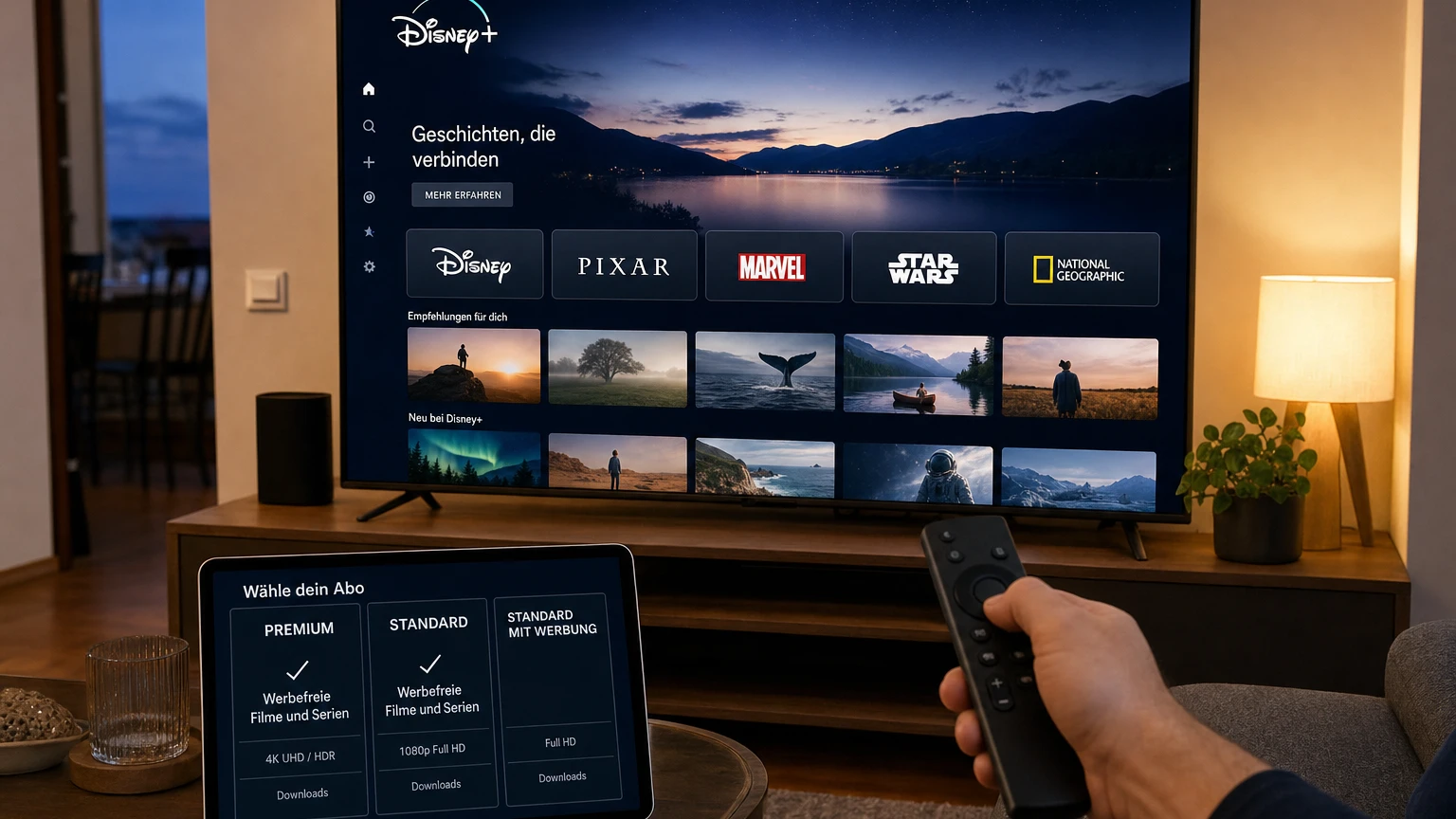
Disney says it is not adding traditional commercial breaks to on-demand movies and shows watched through Disney+ Standard or Premium, pushing back on viral claims that revised European subscriber terms had effectively eliminated its ad-free plans.
The company reaffirmed its position on Monday, September 21, after screenshots and reports about the terms spread widely over the weekend. The clarification matters because the disputed language does allow promotions, sponsorships and some advertising across every plan—but not in the way many subscribers assumed.
The update was sent to customers in Europe, not the United States. Disney says it does not change the viewing experience for European Standard and Premium customers: regular movies and episodes from the on-demand Disney+ library should continue playing without commercial breaks interrupting them.
That does not mean every part of Disney+ is completely free of marketing. Trailers and other promotional material can appear around playback, while live programming, channels, special events and some third-party content can carry advertising regardless of the customer’s plan.
The short answer: What is and is not changing
| Viewing situation | What subscribers should expect |
|---|---|
| On-demand Disney+ movie or series on Standard or Premium | No newly announced commercial breaks during the program |
| Trailer or Disney promotion before or after a title | May appear under the subscriber terms |
| Live sport, live channel or special event | May include advertising or sponsorship |
| Third-party service or licensed content | Separate rights or service rules may allow ads |
| Standard With Ads | Commercials continue to appear during most movies and shows |
| Junior Mode profile | Disney’s help guidance says content does not contain ads |
How the Disney+ ads claim went viral
The dispute began with emails and in-app notices asking European customers to accept an updated subscriber agreement. The notice said Disney had clarified that all service plans could include promotional content, sponsorships and advertising before or after playback, as well as within channels, live or near-live programming, special events and third-party services.
Read without the distinctions between those categories, the wording appeared to say that even Disney+ Standard and Premium would become conventional ad-supported plans. Early reports adopted that interpretation, and screenshots circulated with claims that subscribers paying for ad-free viewing would soon receive commercials.
The timing was also easy to misunderstand. German reporting said the customer notice referred to a subscriber agreement dated June 18, 2026. Subscribers began drawing attention to the notice in mid-September, however, making the language look like a newly imposed weekend change.
An initial German report published September 16 described advertising as coming to every paid plan. Disney responded in Germany on September 17, saying Standard and Premium customers would not begin seeing traditional commercial interruptions inside movies and series. The broader English-language backlash accelerated on September 19 and 20, followed by Disney’s renewed clarification to TechRadar on September 21.
The claim reached a large audience. Public Reddit counters reviewed Monday showed a discussion in the movies community approaching 29,000 upvotes and another technology thread exceeding 20,000. Those figures demonstrate the reach of the controversy, but they do not establish how many people canceled Disney+.
Individual users said they had closed their accounts, yet neither Disney nor independent reporting has provided verified cancellation totals tied to the episode. Claims of a mass subscriber exodus therefore remain unsupported.
What Disney has now clarified
Disney’s position is that the revised wording does not convert Standard and Premium into the cheaper ad-supported experience. The company told multiple publications that those customers will continue watching on-demand films and series without traditional ad breaks during playback.
Disney also said similar exceptions had appeared in earlier agreements. Its explanation divides the material covered by the terms into two broad groups:
- Promotional content around a title: This can include trailers or clips promoting Disney films, series, services or products before or after the selected program.
- Advertising inherent to other programming: Live sport, television-style channels, special events and some replays can retain the commercial inventory associated with the broadcast.
Disney’s European plan pages continue to advertise Standard and Premium as offering movies and series without commercial interruption. Their accompanying fine print says plans can still contain Disney promotions and sponsorships, advertising around playback and ads in live, channel-based, special-event or third-party content.
That combination is the core distinction: Disney is still selling uninterrupted playback of its regular on-demand catalog, not a promise that every screen and every type of programming inside the app will contain no promotional message of any kind.
What “ad-free” actually means on Disney+
Streaming services increasingly use “ad-free” as shorthand for the absence of commercial pods inside their main on-demand libraries. The term does not always cover trailers, sponsorship disclosures, product placement, live broadcasts or content supplied through another service.
Disney’s existing U.S. agreement makes those exceptions explicit. It says no-ads tiers are generally free of commercial interruptions, while reserving exceptions for rights-restricted titles, live or linear programming, special events and replays. It also permits limited promotional material, branded content, product integrations and sponsorship messaging.
The company’s U.S. help center similarly says Disney+ Premium movies and shows are generally available without commercial interruption. It warns that select live and linear programming—including much of the ESPN material available through Disney+—contains advertising regardless of the Disney+ plan.
The revised European wording follows that same practical division, according to Disney. Standard and Premium protect ordinary catalog viewing from mid-program commercial breaks, while other parts of the increasingly broad Disney+ service can carry ads or promotions.
Why the wording still matters
Disney’s clarification resolves the immediate claim that commercial pods are about to interrupt every Premium movie. It does not make the subscriber language meaningless.
The agreement is broad enough to give Disney flexibility around promotions before and after playback, sponsorships and content operated or supplied by third parties. Subscribers who interpret “ad-free” as an entirely marketing-free environment may reasonably find that definition narrower than expected.
The European rewrite also addresses live channels, third-party services and additional subscriptions offered through Disney+. That wider scope suggests the agreement is partly preparing the legal framework for Disney+ to operate as a larger entertainment hub rather than only an on-demand library.
In practical terms, a trailer for another Disney series before a movie is not the same product change as several third-party commercials interrupting the movie. The terms place both promotional and advertising formats close together, however, which helped the more alarming interpretation spread.
Disney could still change its products in the future, provided it follows applicable contracts and consumer rules. Its current statement is a clarification of what the September notice means now—not a permanent guarantee that its plans or advertising strategy can never change.
The European update does not apply to U.S. subscribers
Disney said the updated agreement at the center of the backlash was sent across Europe. U.S. customers did not receive that update, despite several viral discussions citing American plan names or prices while describing the European notice.
For U.S. subscribers, the existing policy remains the relevant one: Disney+ Premium on-demand movies and shows are generally free of commercial interruption, but live and linear programming may contain ads. Promotional clips, sponsorship messaging and content from an ad-supported service within a bundle can also appear.
A customer with ad-free Disney+ but an ad-supported Hulu or ESPN component should not assume every title opened through the Disney+ interface inherits the Disney+ no-ads treatment. The rules attached to the selected content or service can still govern the playback experience.
What subscribers may notice in practice
Standard and Premium movies and series
Disney says ordinary on-demand movies and episodes will continue without newly inserted commercial breaks. A trailer or promotional clip before the title does not mean the plan has been converted into Standard With Ads.
Live programming and sport
Commercial breaks may remain part of the feed on any plan. This is especially relevant as Disney+ adds more sports, events and television-style streams that originate with advertising already built into the broadcast.
Third-party and add-on content
Content supplied by another service may come with separate advertising, licensing or playback conditions. The updated European agreement gives Disney room to offer more of these services through its platform.
Junior Mode
Disney’s help documentation says profiles using Junior Mode do not receive ads during playback. Availability and content selection can vary by country, but the no-ad guidance for Junior Mode remains in place.
Why the backlash became bigger than the product change
The episode exposed a trust problem that extends beyond one Disney+ agreement. Streaming customers have watched services raise prices, create advertising tiers, introduce account-sharing restrictions and place more live programming inside apps originally marketed as on-demand alternatives to television.
Against that backdrop, a mandatory prompt containing the words “all service plans” and “advertisements” was likely to produce concern. The distinction between a Disney trailer before a film and a conventional commercial break during it may be important technically, but both can feel inconsistent with an everyday understanding of “ad-free.”
The strongest viral posts collapsed several different experiences into one claim: advertising around playback, commercials during live events and interruptions inside regular movies. Disney’s response separates them again. Only the last of those would turn Standard or Premium catalog viewing into the conventional ad-supported product, and Disney says that is not happening.
What to do if an unexpected ad interrupts a movie
- Confirm the plan attached to the account. Standard With Ads is designed to place commercials in most on-demand titles; Standard and Premium are not.
- Check where the content came from. A live event, channel, sports feed, bundle component or third-party service may carry ads under separate rules.
- Distinguish a pre-show promotion from an interruption. A trailer before playback falls within Disney’s stated promotional exceptions. A commercial pod stopping a regular catalog movie is a different experience.
- Review the profile. Disney says Junior Mode playback does not include ads.
- Document a possible error. If a regular on-demand Disney+ movie or series is interrupted on Standard or Premium, record the title, time, device and plan before contacting Disney+ support.
What to watch next
The most important signal will be the actual Standard and Premium playback experience—not the broadest possible reading of the agreement. Any introduction of unskippable third-party commercials before catalog titles, or commercial breaks inside them, would represent a more consequential shift than the promotional and live-programming exceptions Disney has described.
Subscribers should also watch how Disney labels third-party services and live channels as the app expands. Clear badges identifying which plan or content provider controls the ad experience would reduce the kind of confusion that drove this backlash.
For now, Disney’s message is specific: European customers are not being moved to an ad-supported version of Standard or Premium, and traditional commercial breaks are not being added to their regular on-demand movies and shows. The revised terms preserve more advertising exceptions than the phrase “ad-free” may suggest—but the viral claim that all Disney+ viewing is becoming interrupted by ads goes beyond what the company has announced.
Make YouTube smarter with NextWatch AI
Use AI search, smarter discovery, playback tools and speed testing directly in your browser.
Add NextWatch AI to Chrome ↗