
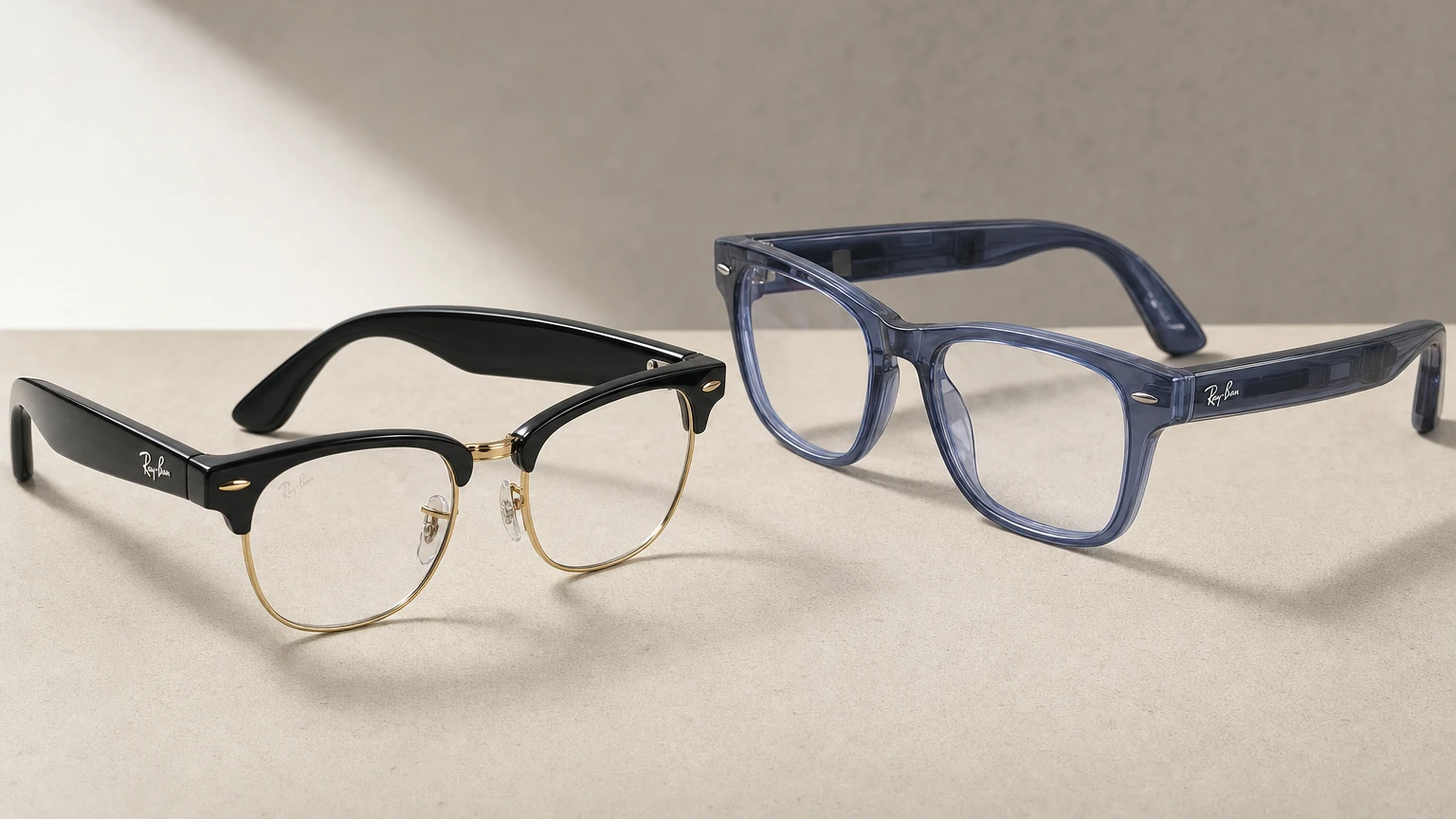
Meta has introduced a $349 pair of camera-free Ray-Ban AI glasses, creating an audio-focused alternative for people who want hands-free calls, entertainment and voice assistance without wearing a recording camera on their face.
Announced at Meta Connect on Wednesday, September 23, 2026, Ray-Ban Meta Audio is available to preorder and is scheduled to ship October 13. Meta says the glasses weigh 43 grams, last up to 12 hours on one charge and receive up to 48 additional hours of use from the included charging case.
The decision to omit the camera is the product’s defining feature. It removes photography, video recording and camera-based visual AI at a time when smart glasses are drawing growing scrutiny from regulators, employers, venues and people concerned about being filmed without meaningful consent.
Meta has not characterized the glasses as a rapid response to that criticism. The company told The Guardian that the product had been in development for years. Its arrival nevertheless gives the privacy debate a concrete place in Meta’s product lineup: customers can now choose between glasses that see their surroundings and glasses built primarily to listen and speak.
What Meta announced
Ray-Ban Meta Audio combines open-ear speakers, microphones, touch controls and access to Meta AI in conventional-looking eyewear. It has neither a camera nor an in-lens display, placing it closer to premium audio wearables than to augmented-reality glasses.
The product comes in two Ray-Ban designs. Clubmaster uses the brand’s familiar browline silhouette, while Burbank has a rectangular shape. Meta says the range includes 23 frame-and-lens combinations, with support for a broad selection of prescriptions.
Wearers can use the glasses for music and podcasts, calls, voice messages, spoken AI queries and translation features. Controls include a touch-sensitive temple and voice activation. Ray-Ban’s product listing also identifies a six-microphone array, Bluetooth 5.3 and compatibility with supported iOS and Android phones.
Meta also plans to connect its Muse personal agent to its AI-glasses portfolio. Muse is designed to work across services and complete approved tasks rather than only answer questions. It can, for example, use connected apps, continue longer-running work and request approval before sensitive actions.
That integration should not be treated as a launch-day guarantee for every advertised Muse capability. Meta says Muse is coming to AI glasses but has not published a precise availability date or a complete model-by-model feature list for Ray-Ban Meta Audio.
| Feature | Ray-Ban Meta Audio | Ray-Ban Meta Gen 3 |
|---|---|---|
| Starting price | $349 | $449 |
| Camera | None | 12 megapixels with 3K video |
| Claimed battery life | Up to 12 hours | Up to 9 hours |
| Primary functions | Audio, calls and voice AI | Audio, voice AI, photos, video and visual AI |
| New styles | Clubmaster and Burbank | Aviator, Zena and Wayfarer |
The comparison makes the trade-off unusually clear. Removing the camera allows Meta to offer a lighter frame and three more hours of claimed battery life than Gen 3, but it also eliminates the visual functions that most clearly separate smart glasses from earbuds and open-ear headphones.
Why a camera-free model matters now
The launch follows a period of mounting criticism around camera-equipped smart glasses. On September 18, Reuters reported that Paris prosecutors had opened at least one criminal investigation after complaints involving suspected sexual harassment and a social-media trend in which women were filmed in public without consent. Prosecutors did not identify the brand of glasses involved.
France’s data protection authority, CNIL, told Reuters it had received workplace complaints involving smart glasses and a growing number of questions from businesses about whether the devices could be prohibited. Some cinemas in the United Kingdom have banned smart glasses, while Australia is considering restrictions on camera-equipped models in government workplaces.
Meta has attempted to strengthen the safeguards on its camera products. Its glasses use a white capture light to signal photography and video recording. Meta says the camera is disabled when the light is covered and that newer protections can detect physical tampering or destruction of the indicator. The company also says it removes listings and accounts advertising services intended to defeat those safeguards.
Those protections make covert recording more difficult, but an indicator cannot create consent. It can notify a bystander that recording may be taking place without giving that person practical control over the recording, sharing or later distribution of the resulting media.
Ray-Ban Meta Audio addresses that specific problem through hardware rather than notification. It cannot take a picture, record video or supply a visual feed to Meta AI. There is no camera indicator to interpret because there is no camera to activate.
What removing the camera solves — and what it does not
For bystanders, the most significant change is straightforward: the new glasses cannot photograph or film them. They also cannot analyze faces, signs, documents, rooms or other surroundings through a camera.
That narrower capability could make the product easier to accept in offices, entertainment venues and social settings where recording glasses have become contentious. It also gives wearers a clearer way to communicate that their eyewear is not a hands-free video device.
Camera-free, however, does not mean sensor-free or data-free. Ray-Ban Meta Audio still contains microphones used for calls, voice commands, messages, translation and conversations with Meta AI. Advanced requests may require cloud processing, while Muse becomes more useful as the wearer connects calendars, communications and other personal services.
Meta says its app allows users to manage information shared with the company, adjust voice-related settings and delete voice recordings. Muse users can choose which services the agent may access, revoke connections and require approval for sensitive actions.
Those controls primarily protect the wearer’s information. They do not automatically settle every concern another person may have about speaking near a networked microphone. Workplaces handling confidential conversations may also restrict microphones, assistants or personal connected devices even when no camera is present.
The practical privacy distinction is therefore more precise than a simple private-or-not-private label:
- Visual privacy improves substantially: the device cannot photograph, film or visually inspect its surroundings.
- Voice and account privacy still matter: microphones, AI requests, connected services and cloud systems remain part of the product.
- Organizations may apply broader rules: a camera-free wearable can still be restricted in sensitive workplaces.
- The wearer gives up visual assistance: the glasses cannot read a sign through a camera, identify an object or answer questions about what the user is seeing.
Meta is also challenging premium earbuds
Removing the camera changes the competitive question. Ray-Ban Meta Audio must justify its price through sound, comfort, calls and convenient access to AI rather than photography or environmental awareness.
The potential advantage is persistence. People who need prescription glasses may already wear the device throughout the day, keeping speakers and an assistant available without placing anything inside their ears. The open-ear design also leaves surrounding sound audible, which can be useful while walking, commuting or working around other people.
The limitations will require independent testing. Audio leakage, call quality, performance in wind, comfort over a full day and real-world battery life cannot be established from manufacturer specifications alone. The consequences of a depleted battery are also different when the electronic device doubles as essential prescription eyewear.
Price makes Meta’s positioning especially notable. Ray-Ban Meta Audio starts at $349, while the camera-equipped Ray-Ban Meta Gen 2 remains available from $379. For an additional $30 at the base level, a buyer can obtain hands-free photography, video and visual AI.
The Audio model is therefore not simply the cheapest route into Meta’s Ray-Ban range. Meta is asking customers to value its lower weight, longer claimed endurance, new frame designs and lack of a camera as deliberate advantages.
That strategy also broadens Meta’s addressable market. Reuters reported that Meta and EssilorLuxottica held roughly 76% of the global smart-glasses market and sold about 7 million units in 2025. A camera-free product allows the market leader to pursue people who like the convenience of wearable audio and AI but reject face-mounted cameras.
What buyers and workplaces should consider
Consumers now have a more meaningful choice among Meta’s Ray-Ban products than frame shape or camera resolution.
- Consider Meta Audio if: music, calls, spoken translation, lighter frames and voice assistance matter more than photography or visual AI.
- Choose a camera-equipped model if: hands-free photos, videos and questions about the surrounding environment are central to the purchase.
- Check the complete prescription price: $349 is a starting price, and prescription or specialty lenses can increase the total.
- Review permissions before connecting services: buyers should understand what an assistant can access before linking email, calendars, messaging or other personal accounts.
- Do not assume every venue will permit them: an organization may prohibit connected eyewear or microphones even if its policy was originally motivated by cameras.
Employers may need to make their policies more precise. A blanket ban on Meta glasses would cover both camera-equipped models and a product incapable of visual recording. Organizations should identify whether their concern is photography, audio capture, cloud-connected assistants, access to confidential information or all of those factors.
Camera-free models may be acceptable in some environments where recording glasses are not. In others, the remaining microphones and AI services will be enough to justify restrictions. The answer will depend on the setting, the information being handled and the organization’s existing device rules.
What to watch before the October 13 release
The first unresolved question is software. Meta needs to clarify when Muse will reach Ray-Ban Meta Audio and which agent functions will be available on the glasses rather than only through a phone or separate app.
Independent reviews will also need to test Meta’s 12-hour battery claim under realistic mixtures of music, calls and AI use. Comfort, microphone performance, speaker leakage and repairability will determine whether the product works as true all-day eyewear rather than an occasional accessory.
The larger test will be social acceptance. If employers and venues distinguish Ray-Ban Meta Audio from camera glasses, Meta will have evidence that removing visual recording opens new markets. If the glasses remain unwelcome because of their microphones and connected AI, the company will learn that wearable privacy concerns extend beyond video.
Either result will matter to the wider AI-hardware industry. Meta has separated the assistant from the camera and turned that separation into a premium product choice. Demand for Ray-Ban Meta Audio will help show whether mainstream AI glasses are destined to become visual computers—or fashionable audio companions that happen to sit in front of the eyes.
Make YouTube smarter with NextWatch AI
Use AI search, smarter discovery, playback tools and speed testing directly in your browser.
Add NextWatch AI to Chrome ↗